20 - Invitation: Starting Your Prayer Shield
Inviting someone to stand with you in prayer feels harder than it should. This episode gives you the confidence to finally have that conversation.

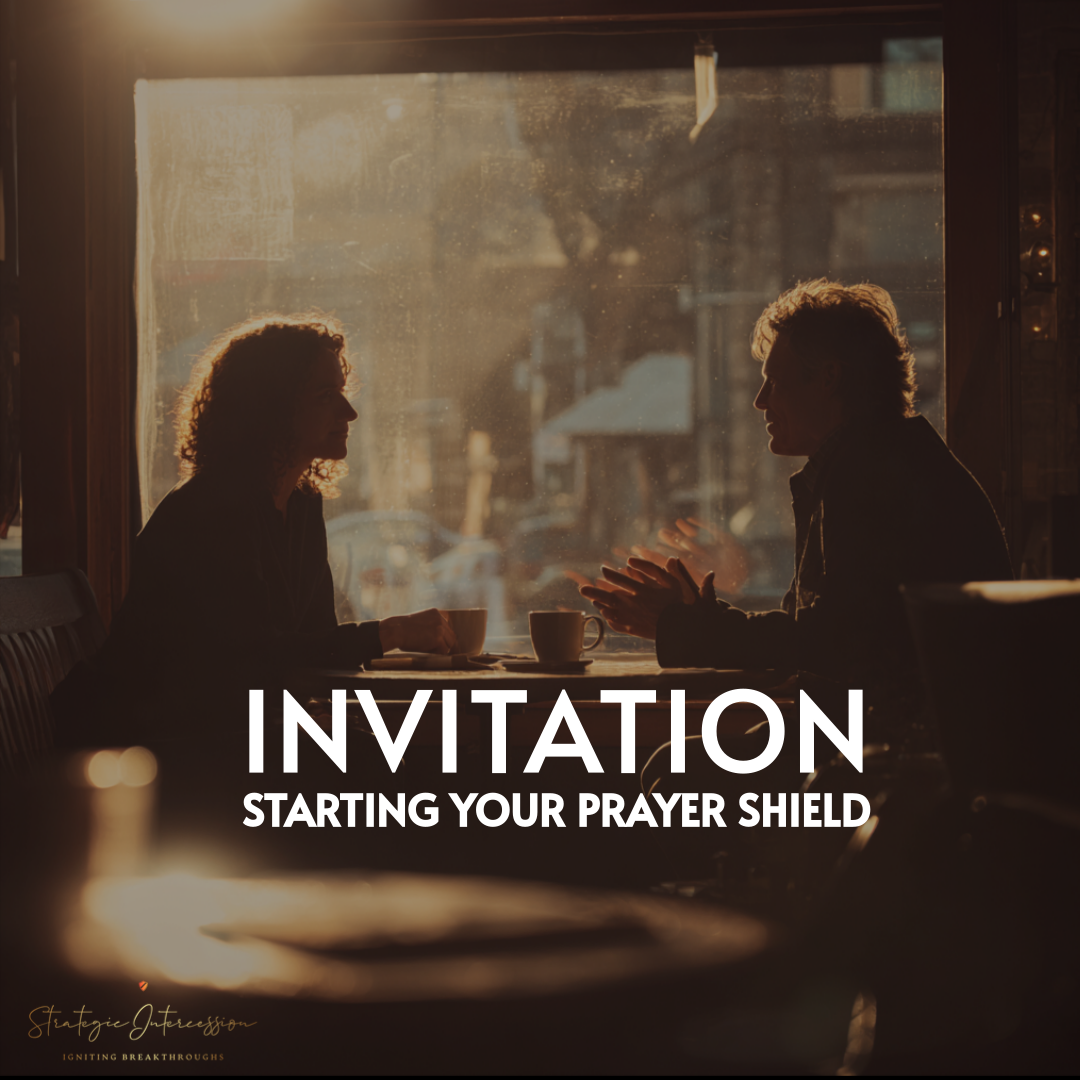
Hey friends, today I want to share something that grew out of a really beautiful conversation I had with a fellow Kingdom leader. It opened my eyes again to how many of us, even those seasoned in ministry, still struggle to establish and sustain a prayer shield.
My friend has this consecrated property, set apart for a greater ministry purpose. She's a deep woman of God, full of experience, faith, and anointing. Yet she hasn't formed a formal prayer shield. And yes, she listens to this podcast faithfully! That got me thinking: how many of you listening right now are in the same place?
Maybe you lead a creative team or run a business or serve in your local church. You know the spiritual warfare is real. You feel it. But actually inviting people to pray for you regularly? That feels presumptuous. Who are you to ask people to commit to covering you in prayer?
Or maybe you've thought about it, but then you start worrying: what if people say yes out of obligation? What if they think you're being needy? What if your work isn't "important enough" to deserve that kind of support?
If this is you, I'm on your side. I want you resourced, strengthened, and surrounded, because the things God's asked you to carry are not light. I've watched too many leaders (kingdom-minded, sincere, gifted leaders) serve without proper covering.
Your union with Jesus is actually far more important than any assignment you've been given. And not having adequate prayer support actually assaults how close you feel to God. Constant warfare takes a toll.
What If It Didn't Have to Be This Hard?
I've seen what happens when believers are properly covered, when strategic intercession is in place. Their emotional and spiritual health stabilizes. The atmosphere around their lives shifts. Joy slips in. Opposition that once felt relentless suddenly loses its grip.
Let me give you a recent example from my own life. This past quarter my back went out for three days. I was scheduled to leave for a ministry retreat where I'd agreed to serve with the intercessory team. The Wednesday morning I was supposed to drive four hours to this event, I couldn't stand up straight. The pain was intense, and I honestly didn't see how I could serve well in this condition.
My husband, who's a member of my prayer shield, placed his hand on my back and commanded the pain to go, in Jesus' name. I stood up straight, pain free, and served through to Sunday. Without prayer, I could have served exhausted through pain for those five days, hobbling and immobilized. But, I didn't have to.
We suffer so much unnecessarily because we forget about God's provision.
And I know for some of you, the reason you haven't built a prayer shield is because you don't want to burden anyone. You've been protecting those closest to you from the heaviness of your battles, or the tedium of the details. You tell yourself, "I'll ask for prayer when it's an emergency."
But here's the thing: if prayer is only reserved for crises, you never experience what it's meant to provide: prevention, protection, and peace. It opens the way before you and secures the provision of Heaven.
Regular intercession works like preventative medicine. It keeps you in spiritual shape so you're not constantly recovering from the last hit. Strategic intercession looks forward. It removes obstacles before they form, cancels demonic schemes before they manifest, and draws down everything in God's storehouses with your name written on it.
You're not actually asking people to do you a favor. You're inviting them to partner with God in what He's doing through you.
What Usually Goes Wrong
Let me tell you about the single biggest mistake I see leaders make when trying to build a prayer shield. It's so subtle you might not even realize you're doing it.
Don't draft potential prayer shield members into service—invite them.
This advice could easily get lost in a sea of best practices, but I don't want you to miss it. Drafting someone onto your prayer shield, whether for an event, or your assignment in general, goes like this: "I'm doing such and such, and I would really like you to pray for me." And then pasting in the next two pages of your schedule or particulars. That's a draft, not an ask!
This has happened to me so many times—the assumptive close! Typically, I receive the draft notice through a group text or an email. I may care deeply about that person or their work, but caring doesn't equal calling.
When you draft people, you're making the decision for them. You're assuming they should want to be part of your prayer shield. You're not giving them space to check with God about whether this is something He's inviting them into.
And here's what happens: some people will say yes because they feel obligated. They don't want to disappoint you. But inside, they're thinking, "Oh no, now I'm stuck." It's awkward. It creates pressure. It creates exactly the burden you were trying to avoid placing on anyone.
So instead of drafting them, invite them. Make the invitation clear. Make it specific. And give them freedom to say yes or no without guilt.
The Invitation
So when you're inviting someone onto your prayer shield, take time to define what that means. Be specific about the boundaries. And be sure to give them freedom.
I usually do this in person. But whether you're talking face-to-face or sending an email, the same principles apply. If you're asking in person, make it clear they don't need to answer right away. Tell them to pray about it and text or email you their response. That removes the pressure of having to say yes on the spot.
Here's a sample invitation you could adapt for your situation:
Dear [Name],
I want to invite you into something I believe God is highlighting for this season: building a more intentional prayer shield around my work at [ministry/organization].
Over the past [timeframe], I've sensed that the Lord is asking me to steward this assignment with greater wisdom. Part of that wisdom is recognizing I can't do it alone. I need strategic intercession, not just crisis prayer.
I'm asking a small group of people if they'd be willing to cover me in prayer for the next year. This isn't about daily obligations or lengthy commitments. It's about being willing to listen when the Holy Spirit brings me to mind, and then praying what He gives you.
I'll send brief updates, maybe weekly, maybe monthly, depending on what's happening. You'd have complete freedom to pray as much or as little as God leads. No guilt. No pressure. And at the end of the year, we'd both reassess whether this is still a fit.
Would you be willing to pray about whether God is inviting you into this role? I'd be honored to have you standing with me, but I also want you to feel complete freedom to decline if this isn't the right season for you.
Let me know what you sense.
With gratitude,
[Your name]
Notice what this does. It honors them without flattering. It gives a clear timeframe: one year, then reassess. It defines what you're asking: listening, not daily obligation. And it gives them permission to check with God first.
This is inviting, not drafting. And it changes everything. When people are invited rather than drafted, they pray from calling, not obligation. The intercession is completely different - and that means your prayer shield actually works.
Who Should You Actually Ask?
Now, who should you ask? Scripture actually gives us a clue.
In 2 Corinthians 9, Paul is writing to the church in Corinth about generous giving. He tells them that by serving others, they'll not only meet needs but spark gratitude and prayer. He says, "As a result of your ministry, they will give glory to God… and they will pray for you with deep affection because of the overflowing grace God has given to you."
It's a beautiful picture of mutual edification. Paul is saying that when you serve people in love, those same people will lift you in prayer out of gratitude.
So when you're asking the Lord who to include on your shield, look at those you've poured into. Look at the people you've served. Look at the relationships where there's already reciprocal love and honor.
Those are often the people God will highlight.
This doesn't mean everyone on your prayer shield has to be someone you've served directly. God might also highlight intercessors you don't know well yet. He might bring people to mind who carry the gift of strategic intercession and would welcome a focused assignment.
Start with God. Let Him show you who's meant to stand with you. Don't just default to family and friends. Don't assume everyone who loves you should be on your shield. And don't pressure yourself to invite people because you think you "should."
Wait. Listen. Pay attention to who God keeps bringing to your mind. Those are your people.
You don't have to invite everyone at once. You can start small. Three people. Five people. However many God highlights. You can always expand your shield later as your assignment grows or as God brings more people into your life.
The goal isn't to build the biggest prayer team. The goal is to have the right people, the ones God has assigned to stand with you in this season.
What Your Invitation Needs to Include
Whether you're inviting ministry colleagues, marketplace partners, or personal friends, every prayer shield invitation should include a few key elements:
-
Clarity about the commitment
Don't leave people guessing. Tell them what you're asking for. Is it a year? Six months? Ongoing with periodic check-ins? Prayer only for a particular event? Be specific.
-
Freedom to decline
Make it crystal clear that "no" is a completely acceptable answer. You're not guilting anyone. You're giving them an opportunity to partner with what God is doing through you, but only if He's calling them to it.
-
Boundaries around communication
Will you send weekly updates? Monthly? Only during intense seasons? Let them know what to expect so they can decide if it's manageable.
-
An easy way to respond
Don't make people wonder how to answer. Give them a simple way to say yes or no. Email works. A text works. Whatever feels natural for your relationship.
The people who truly carry the gift of intercession don't see prayer as an obligation they have to fulfill. They see it as a weapon they get to wield. They see it as access to frontline Kingdom work they might not otherwise experience.
So when you invite someone to cover you in prayer, you're not asking them to carry something heavy for you. You're giving them access to share in the reward of Kingdom wins.
You Were Never Meant to Fight Alone
Friend, if you've struggled to get your prayer shield off the ground, this is your moment to try again, with understanding and grace.
Ask God who belongs on your shield. Invite them with clarity and warmth. Make it easy for them to say yes...or to say no.
I've put together a Prayer Shield Starter Kit for you. Right now, Section 1 is available. It includes three sample invitation letters you can adapt for your situation. You'll find language for ministry leaders, marketplace leaders, and temporary coverage for things like mission trips or major transitions.
Download it at strategicintercession.com/starterkit
In the next episode, we'll talk about what happens after people say yes. How do you actually structure your prayer shield? What do you communicate? How often? How do you keep people engaged without overwhelming them?
One more thing: some of you might be thinking, 'I already have people praying for me.' That's great! In episode 22, we'll talk about the three different types of prayer shields and how to tell what you actually have. Because if you're expecting primary prayer shield results from a secondary or tertiary shield, you're going to be disappointed. Consistent, personalized prayer coverage makes all the difference in how effectively your prayer shield supports you.
But today, just get past this first gate. The fear of burdening people has kept too many good leaders isolated for too long.
You were never meant to fight alone.